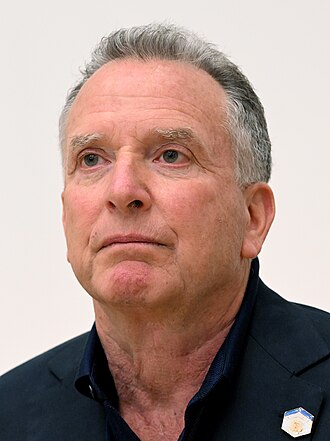
① Why Today
~39 hours to deadline — Tue Apr 7, 04:00 GST — and he just added a fourth track
Egypt confirmed calls with Witkoff today. He is now running four simultaneous mediation tracks — Muscat, Geneva, Vance back-channel, and now Cairo — with ~39 hours to the April 6 deadline (Tue Apr 7, 04:00 GST). He is the single most consequential American in this crisis.
The Egypt development is not a footnote. It is evidence of Witkoff's operating logic: when one track stalls, he adds architecture. He is not waiting for Araghchi to blink. He is building the conditions in which blinking becomes possible. Cairo brings Suez Canal leverage, Arab League legitimacy, and historical Iran back-channel experience to a table that previously consisted only of Oman and Switzerland. That is a meaningful expansion in the final ~39 hours.
The Four-Track Architecture
①
Muscat Channel (Oman)
The primary diplomatic back-channel. Witkoff delivered Trump's letter to Khamenei via Oman in February 2026. First direct US-Iran leadership communication since 1979. Sultan Haitham's government has hosted multiple rounds including the February "significant progress" session.
▸ Active but stalled on sequencing
②
Geneva (Technical)
Working-level technical talks between US and Iranian nuclear negotiators on inspection protocols, enrichment thresholds, and sanctions sequencing. Araghchi attended as a signal that Iran treats these as politically serious, not merely procedural.
▸ Framework gap not bridged
③
Vance Back-Channel
VP Vance's direct line to Iranian leadership, running parallel to Witkoff. The existence of two simultaneous US-Iran channels suggests either coordination (Vance and Witkoff dividing the message) or competition (two different policy postures running simultaneously). The former is more likely — it creates Iranian uncertainty about which channel produces outcomes.
▸ Parallel pressure mechanism
④
Cairo (Egypt) — NEW
Egypt's foreign ministry confirmed calls with Witkoff today [Asharq Al-Awsat]. Egypt brings: Suez Canal economic interests directly tied to Hormuz resolution, historical Iran back-channel experience from the Mubarak era, and Arab League legitimacy as cover for Iran to negotiate without looking like it's capitulating to Washington directly.
▸ Activated today — ~39h before deadline
② Background & Rise
The Bronx to the Oval Office. Steven Charles Witkoff was born in 1957 in the Bronx, raised in a Jewish family in New York. He attended Hofstra University School of Law, passed the bar, and practised real estate law briefly before pivoting to development in the late 1980s. He founded the Witkoff Group, a commercial real estate development and investment company assembling a portfolio of luxury residential and hotel projects across New York, Miami, Las Vegas, and internationally. His business model: identify distressed properties, acquire at below-market prices, reposition through renovation and rebranding, and sell or develop for profit. He is not a builder — he is a negotiator of acquisitions and financing structures.
The friendship that produced the envoy. Witkoff and Trump have been friends since the 1980s New York real estate world, where they moved in the same circles. The friendship predates Witkoff's business success and Trump's political career — it is genuine peer friendship, the kind that produces real personal trust. This is the analytically critical fact about Witkoff: he has authority and access that career diplomats do not because Trump genuinely trusts him, not just as a professional but as a person. When Witkoff tells Trump that a diplomatic track has not been exhausted, Trump believes him. When he recommends extending a deadline, the recommendation is accepted. This is not bureaucratic weight — it is personal weight, which is more durable and less predictable.
Gaza: the origin story of his diplomatic credibility. Witkoff was not initially a foreign policy figure in Trump 2.0. His first diplomatic role was in Gaza hostage negotiations — Trump tasked him with brokering a ceasefire and hostage release deal between Israel and Hamas in early 2025. The January 2025 ceasefire (which produced the first-phase hostage releases) was attributed partly to Witkoff's shuttle diplomacy across Qatar, Egypt, and Israel. His approach: direct personal engagement with leaders, willingness to travel to difficult and politically unpopular destinations, and optimistic public framing to maintain diplomatic momentum when the underlying talks were grinding. The Gaza ceasefire — fragile, contested, but initially holding — established his credibility in Trump's eyes as someone who could deliver on hard problems. From Gaza hostage negotiations to Iran nuclear talks is an extraordinary leap — from one of the most localised conflicts to one of the most technically complex and strategically significant negotiations in the world. Trump made this leap deliberately, apparently calculating that Witkoff's deal-making instinct transferred across domains regardless of technical subject matter. The bet is not obviously wrong.
"Meetings with Iran are expected this week and President Donald Trump wants a peace deal."
— Steve Witkoff, US Special Envoy, April 4, 2026 [Anadolu Agency]
The February 2026 Oman moment. When Trump sent Witkoff to Tehran via Oman with a private letter from Trump to Khamenei, this was an unprecedented direct communication — Trump and Khamenei have never spoken or met. The letter apparently offered talks while warning of military consequences if talks failed. Witkoff's delivery of the letter, and Iran's decision to respond through the Oman channel rather than rejecting it outright, represents the first meaningful US-Iran direct leadership communication since the 1979 revolution. Getting to that point was Witkoff's achievement. The fact that it happened at all — that an IRGC-governed Iran agreed to receive a letter from a Trump envoy and respond positively — is the kind of outcome career diplomats said was not possible. Witkoff did not know it was not possible.
③ Decision-Making Style — Actual vs Stated
The Gap Between What He Says and What He Does
What He Says Publicly
Consistently optimistic framing. After the February 2026 Oman round: "good faith engagement" from Iran. After Geneva: "significant progress on key issues." Before the April 6 deadline: "Trump wants a peace deal" and meetings are expected. He maintains deal momentum through positive framing regardless of actual progress underneath.
What the Signals Suggest
The gap between Witkoff's public framing and the underlying state of the talks has been systematically large. The core gap — US requires enrichment cap and IAEA monitoring upfront; Iran requires sanctions relief before concessions — is the same structural impasse that killed the 2021-2022 JCPOA revival talks under Biden. It has not been resolved.
Why the optimism is a technique, not a belief. Witkoff's public optimism serves two purposes that have nothing to do with the actual state of negotiations. First, it maintains diplomatic momentum: if talks look like they are failing, domestic political pressures to walk away — from hawks in Congress, from Israel, from Rubio's corner of the State Department — accelerate. A negotiator who publicly declares talks are stalling loses the political space to continue. Second, it buys time for back-channels to work: the Geneva and Oman technical tracks need room to narrow the gap on enrichment thresholds and sanctions sequencing without public commentary poisoning each exchange. Witkoff's optimistic framing creates that room.
His actual negotiating instincts — from participant accounts. What reporting and leaked accounts suggest: Witkoff is direct and relationship-focused in the room, and he is willing to signal flexibility on sequencing and framing even when the substantive gap is large. He has reportedly indicated US willingness to discuss "phased" approaches — sanctions relief tied to specific verification milestones rather than requiring complete Iranian compliance before any relief. This flexibility is strategically sound but may exceed what he has formal authority to commit. The ambiguity is intentional. Iranian negotiators, who are sophisticated, understand this and probe the edges of his authority through technical rounds. His job is to keep them probing rather than walking away.
The real estate cognitive model. Witkoff approaches Iran the way he approaches a commercial counterpart in a distressed property acquisition: there is a seller (Iran) who has something to sell (compliance), a buyer (the US) who wants to acquire it, and the gap between asking price and offer price needs to be bridged through creative structuring — phased payments, contingency arrangements, face-saving architectures that allow both parties to claim they got what they needed. The analogy breaks down in important ways — Iran's domestic political constraints are not equivalent to a seller's financing needs — but it does explain his instinct toward flexibility on structure even when the substantive ask is non-negotiable.
④ Institutional Incentives & Constraints
What He Can Offer vs What Requires Trump Sign-Off
✅
Can offer
Signal Trump's genuine willingness to pursue a deal (which he can do authentically because he knows Trump's mind). Discuss the broad architecture of a potential agreement. Offer informal assurances about US intentions on specific sanctions tranches. Create political space for Iranian negotiators to return to Khamenei with a framing that can be sold domestically as "we extracted concessions."
⛔
Requires Trump
Any specific sanction-by-sanction relief schedule. The "breakout time" threshold the US will accept as compliant. Whether the US will accept a deal framed as something other than complete Iranian enrichment abandonment. Whether secondary sanctions on European companies operating in Iran would be lifted — a critical ask for Iran because European economic engagement is one of Iran's few non-Russian hedges.
🟡
The grey zone
The authority ambiguity is deliberate. Witkoff's informal authority (his relationship with Trump) coexists with formal authority uncertainty (what the NSC, State, and Treasury have formally agreed to offer). This ambiguity is a standard diplomatic technique — it allows the negotiator to hint at flexibility without creating formal commitments that lock in a position prematurely. Both sides understand this game.
⚡
Rubio tension
Marco Rubio is more hawkish on Iran than Witkoff. Rubio's preferred outcome: Iran gives up all enrichment, accepts permanent monitoring, dismantles Natanz and Fordow. Witkoff's instinct is toward a deal that can be done — more moderate. The tension is not personalised but structural. Witkoff can go to Trump directly to resolve disputes, which gives him advantage in internal debates — but only while Trump supports the diplomatic track.
The Jared Kushner factor. Kushner was reportedly photographed with Witkoff at the Oman foreign ministry during the February talks. Kushner has no formal second-term role but his Abraham Accords institutional knowledge — how Gulf states' domestic politics intersect with their foreign policy commitments — is directly relevant to the current negotiations. The Kushner-Witkoff coordination suggests two Trump-adjacent figures working the same track. This is a feature, not a bug: it means Witkoff can run ideas past Kushner without involving the formal bureaucracy, maintaining the personal-network decision-making model that characterised Trump's first-term foreign policy.
⑤ Track Record Under Pressure
2025 — Gaza Phase 1
Delivered the first-phase ceasefire. Months of shuttle diplomacy across Qatar, Egypt, and Israel produced the January 2025 ceasefire: Israeli withdrawal from populated areas, Hamas releasing civilian hostages in exchange for Palestinian prisoner releases. The deal produced political blowback for Netanyahu (Ben Gvir resigned briefly) but held the coalition together. Phase 2 negotiations have been slower. Track record: delivered a deal that the prior administration could not.
February 2026 — Oman
Opened the US-Iran direct channel. Delivered Trump's personal letter to Khamenei via Oman — the first direct US-Iran leadership communication since the 1979 revolution. Iran responded through the channel rather than rejecting it. Both sides publicly characterised it as "significant progress" or "good faith engagement." Substantive gap on enrichment vs sanctions sequencing remained unresolved, but the channel was open. Track record: established a diplomatic infrastructure that did not exist before him.
March 2026 — Geneva
Kept talks alive past Iran's initial deadline threats. When Iran's domestic hardliners pressured Araghchi to declare talks failed after US-Israeli strikes killed Khamenei (February 28), Witkoff's back-channel communication kept Araghchi at the table. Geneva technical talks on inspection protocols and enrichment thresholds continued. Track record: managed escalation to prevent collapse of the diplomatic track.
April 2026 — Deadline extension
Convinced Trump to extend the deadline. The April 6 deadline was an extension from a prior Trump deadline, granted "at Iranian government request" — but Witkoff recommended accepting the request, arguing the diplomatic track had not been exhausted. Trump accepted his recommendation. This is the clearest evidence of Witkoff's real influence: he convinced Trump, who has a documented pattern of treating deadline extensions as weakness, to extend anyway.
April 5, 2026 — Today
Added the fourth track. Egypt call confirmed. Simultaneously: Iran granted Iraq Hormuz exemption and the second US airman was rescued. Whether these Iranian concessions are the result of Witkoff's four-track pressure or independent Iranian calculation is unclear — but his presence across all four tracks means any progress is legible as his outcome.
⑥ Red Lines — Revealed by Behaviour, Not Statements
Red Line 1: Trump's support is his entire authority
Witkoff has authority only as long as Trump backs him personally. If Trump publicly overrides a Witkoff position or sends a contradictory signal (via Rubio, via a Truth Social post, via a military action), his credibility as a negotiating counterpart collapses immediately. He knows this. He is therefore careful not to overcommit Trump without prior alignment — which means he has Trump's ear more often than any career diplomat, not less. His red line is not about substance: it is about protecting the Trump relationship that is his entire source of weight.
Red Line 2: Deal over no deal — revealed preference
His revealed preference is a deal. He recommended the deadline extension. He added a fourth track on the final day. He has reportedly signalled flexibility on enrichment thresholds and sanctions sequencing that exceeds what the formal US position endorses. A Witkoff who believed the talks were hopeless would not be adding Cairo twelve hours before the deadline. This makes him more flexible than other US interlocutors but also potentially prone to overpromising on architecture that Trump or Rubio will later reject.
Red Line 3: The win must be frameable as a win
Like Trump, he needs an outcome that can be characterised as a victory — not for vanity but because any deal that requires him to publicly frame it as a concession will face immediate internal resistance from Rubio and from Congress. His diplomatic instinct is therefore toward creative labelling: a deal that looks like JCPOA Plus but is called something else, framed as "Trump's deal — better than Obama's because extracted under maximum pressure from a position of Iranian weakness." The framing is not cosmetic. It is the political oxygen the deal needs to survive long enough to be implemented.
⑦ Current Posture — April 6 Deadline
What a Witkoff-brokered deal would look like
1
A "phased" structure: Iran accepts IAEA monitoring restoration and enrichment cap — potentially at 20%, not the 3.67% JCPOA level, representing a significant relaxation of the formal US ask — in exchange for initial sanctions relief, probably beginning with petroleum sanctions.
2
Verification-triggered steps: Further reductions in enrichment (toward 3.67%), enhanced IAEA access to specific disputed sites (Fordow, Natanz), and additional sanctions tranche relief tied to compliance verification milestones rather than to front-loaded commitments.
3
The stockpile problem: Iran's existing 60%-enriched uranium stockpile would be addressed in technical annexes — diluted, exported to a third country, or held in escrow — without requiring immediate physical removal, which Iran has consistently refused. The political framing would emphasise the IAEA monitoring of the stockpile rather than its location.
4
The naming strategy: The deal would be called something other than JCPOA — probably "the Trump Agreement on Iran's Nuclear Programme" or similar — to prevent the Obama comparison that would give congressional Republicans grounds to reject it and give Trump domestic political risk.
5
The Israeli problem: None of the above is acceptable to Israel's hardline coalition partners. Witkoff has built a Gaza ceasefire over Netanyahu's domestic opposition before. But a nuclear deal that looks like enrichment-short-of-weapons-capability would trigger a Ben Gvir-level coalition crisis in Jerusalem. This constraint is outside Witkoff's negotiating lane — it is Trump's problem to manage.
What the Iran concessions today actually signal. Iran granted Iraq Hormuz exemption and the second US airman was rescued today — before the deadline. These are not unilateral acts of goodwill. They are calculated signals: Iran is removing two of its strongest leverage cards (the humanitarian blockade optics, the missing American serviceman) before the deadline, not after. The logic: if talks collapse on April 6, Iran wants to have already demonstrated "reasonable" behaviour to limit the US justification for military escalation. If talks succeed, these concessions are pre-positioned as evidence of Iran's seriousness. Either way, the decision was made in Tehran, not in response to Witkoff directly — but Witkoff's four-track architecture created the diplomatic environment in which this Iranian calculation made sense.
⑧ What to Watch
- Public statements after each round: Any shift from "significant progress" to "constructive engagement" or "good faith" signals the talks have stalled without breaking down. Any direct mention of "remaining gaps" or "specific issues" signals a leak in the optimism framing — meaning progress is either very close or actively collapsing.
- Technical vs political rounds: If talks drop to technical working-group level in Vienna on specific inspection protocols, that is a good sign — technical talks mean the political framework has been agreed enough to work on details. If talks stay at political level indefinitely after April 6, the framework has not been agreed and the diplomatic track is running on fumes.
- Military signals from the US side: If US military assets in the region change posture — additional carrier groups arriving, specific munitions pre-positioned — that signals the military track is being elevated relative to the diplomatic one. This may be Witkoff's tactic to create urgency (he controls the timeline threat), or it may signal his track is losing inside the administration.
- His access to Trump: If reporting in the coming days indicates Rubio or military advisors are the dominant voice in NSC Iran discussions — and Witkoff is notably absent — his influence is declining. Conversely, if Witkoff is named in readouts of Trump's Iran calls or decisions, he remains the primary lane.
- Egypt's next move: Today's Egypt call opened a fourth track. Watch for whether Egypt's foreign ministry issues a public statement characterising the Witkoff call — if they do, Cairo is positioning itself as a visible mediator (political gain). If they stay silent, Cairo is working the back-channel (more useful operationally).
- Araghchi's domestic position: Araghchi is Iran's face of flexibility. If hardline media in Tehran begins attacking Araghchi by name — as it did during the 2022 JCPOA revival talks — it signals IRGC pressure is winning internally and the diplomatic track is closing. If Araghchi remains publicly prominent and unchallenged, the diplomatic lane is still politically viable in Tehran.
⑨ Lore's Lens
The structural read
Witkoff is the right person for the wrong version of this job. He is a superb deal-architecture builder in environments where both parties want an agreement and the gap is structural — where you need someone to design the face-saving construction that lets both sides say they won. That is precisely the role the Iran track requires. But he is not a person who can adjudicate between the IRGC hardliner faction and the Araghchi pragmatist faction within Tehran. He can build a bridge, but he cannot make Tehran decide to cross it.
The Egypt call today is the most revealing thing he has done. Adding Cairo as a fourth mediation pillar ~39 hours before the deadline is not a sign of confidence — it is a sign that the other three tracks have not produced a framework agreement, and he is trying to create new conditions rather than wait for the existing conditions to resolve. Whether this is strategic creativity or deadline scramble depends on what happens in the next ~39 hours.
The deeper problem is one Witkoff cannot solve: the Iranian system is not unified. Araghchi wants a deal. The IRGC hardliners are fighting a different war — one in which any agreement with Washington is domestically radioactive regardless of the material benefits. Khamenei (dead since February 28 in our scenario) is no longer available to adjudicate between them. Whoever controls the Iranian decision on April 6 is not simply Araghchi's principal — it is a contested factional outcome inside a governing system under maximum stress from US-Israeli strikes and Hormuz crisis management simultaneously.
Witkoff's four tracks can create conditions. They cannot create consensus inside Tehran. If a deal happens tonight, his architecture made it possible. If it does not, his architecture made the failure survivable — because four tracks failing is harder to call "talks collapsed" than one track failing. That political ambiguity is itself an asset. He is building escape routes even while he is building bridges.
Sources
Egypt holds calls with Witkoff and regional counterparts — Cairo enters the mediation track
Asharq Al-Awsat · 5 April 2026
Witkoff: "Meetings with Iran are expected this week and Trump wants a peace deal"
Anadolu Agency · 4 April 2026
Iran grants Iraq Hormuz transit exemption; second US airman rescued
Al Jazeera · The Independent · CNN live blog · 5 April 2026
Archie entry: Steve Witkoff — background, decision-making style, track record
Lore Knowledge Base · Updated 5 April 2026
Lore Dhuhr Brief storyboard — 5 April 2026
DiwanIQ Intelligence · 5 April 2026 08:15 GST
⑩ The Hidden Layer
What almost nobody sees
Witkoff convinced Trump to extend the April 6 deadline. That sentence is almost entirely absent from press coverage — which focuses on Trump's ultimatum and Iranian defiance. But the extension didn't happen because Iran asked nicely. It happened because Witkoff walked into the Oval Office and told Trump the diplomatic track hadn't been exhausted. Trump agreed. That is the hidden architecture of this crisis: the man who looks like a peripheral character — a real estate developer with no foreign policy background — is the person who determined how much time this negotiation gets.
The analytical implication is significant. Witkoff is not executing Trump's Iran policy. He is shaping it, in real time, through personal access that no career diplomat or cabinet member reliably has. When Rubio issues a hawkish statement, it doesn't necessarily reflect the current White House position. When Witkoff speaks, even in vague optimistic terms, it reflects what Trump has authorised him to explore. The tell is always the same: watch who Trump is talking to, not who is speaking on television.
The second hidden layer: Witkoff's entire negotiating advantage is that he doesn't know what's impossible. Career Iran hands — in State, CIA, think tanks — will tell you the enrichment sequencing problem is structurally unsolvable. They've been telling presidents this since 2005. Witkoff has read none of their papers. He approaches Iran the way he approached a distressed hotel in Vegas: the other side has a number, he needs to find it, and sceptics who say there's no deal are often protecting their own prior positions. Whether this naivety is an asset or a liability in the next 39 hours is the question that will define his legacy.